
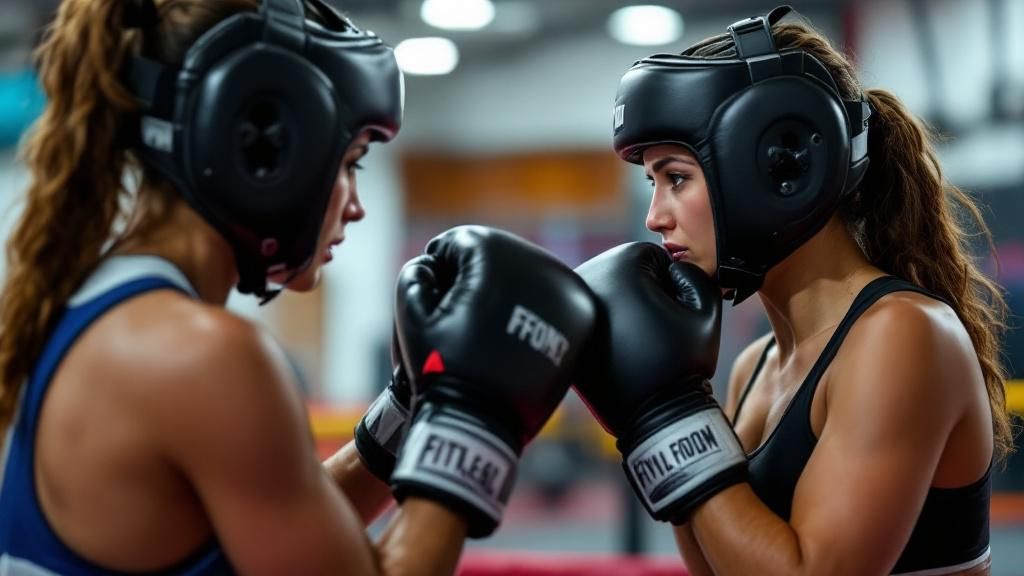
Women’s boxing has experienced a remarkable surge in interest across the UK, with participation rates climbing steadily over recent years. This growth has encouraged training centres nationwide to expand their specialist fighting offerings, acknowledging the demand for high-standard facilities tailored to female boxers. From specialist boxing venues to traditional fitness centres, the infrastructure supporting women’s fighting disciplines has never been more robust. This article explores the driving forces behind this transformation and examines how expanded facilities are reshaping the terrain of women’s boxing in Britain.
The Rising Tide of Female Boxers
The increase in women’s boxing participation reflects a significant cultural shift within the fitness industry. Over the last five years, membership figures have increased dramatically, with women now comprising an growing share of gym memberships for boxing throughout the UK. This demographic transformation shows changing attitudes towards combat sports and female athleticism, alongside growing awareness of boxing’s exceptional cardiovascular and strength-building benefits. Gyms have responded enthusiastically to this demand, recognising that female boxers represent both a committed and growing market segment.
Beyond mere statistics, this trend reflects underlying societal changes regarding women’s involvement with traditionally male-dominated sports. Female boxers today enjoy greater visibility through media coverage, career prospects, and inspiring figures performing at the highest level. Community initiatives and community-based schemes have increasingly widened access to boxing training, encouraging women from varied communities to explore the sport. The synergy between better training venues, inclusive settings, and growing social recognition has generated an remarkable chance for women to engage with boxing professionally, whether for physical conditioning, competition, or individual growth.
Gym Facility Expansion Across the UK
The development of combat sports spaces across the United Kingdom has been nothing short of remarkable. Large city centres including London, Manchester, and Birmingham have witnessed significant investment in dedicated combat sports spaces, with gyms fitting professional-grade equipment tailored for boxing training. These venues now feature numerous striking bags, speed balls, and state-of-the-art ring setups. Gym operators have recognised that women boxers demand dedicated spaces where they may train comfortably and safely, resulting in the introduction of female-only classes and female-focused coaching programmes that address different ability levels and expertise.
Beyond the major urban areas, community gyms have similarly adopted this expansion trend, refurbishing their spaces to support growing numbers of female participants. Local community hubs and independent boxing clubs have invested substantially in enhancing their facilities, recognising that quality facilities directly correlate with client loyalty and fulfilment. Numerous gyms now employ female coaches and trainers who bring invaluable expertise and connection to the sport. This extensive funding illustrates the genuine commitment from gym owners to support women’s boxing development, guaranteeing that aspiring boxers across the UK have entry to high-quality coaching venues irrespective of their geographical location.
Breaking Down Barriers and Transforming Perceptions
The development of boxing facilities for women has substantially altered cultural views towards female participation in combat sports. Once regarded as a male-dominated domain, boxing is now increasingly accepted as an accessible sport accepting participants of all genders. Improved training facilities has established women’s involvement in gyms and boxing rings, questioning traditional misconceptions. This attitudinal shift illustrates broader changes in how people perceive female athleticism and strength, motivating more women to pursue boxing without worry about social disapproval or bias.
Focused women’s boxing programmes have shown instrumental in developing confidence amongst those new to the sport. Professional coaching tailored workout plans, and supportive community spaces establish inclusive spaces where women feel encouraged to enhance their skills. Many gyms now provide women-only classes and female-led coaching staff, tackling historical barriers that previously discouraged participation. These modern schemes demonstrate that reducing obstacles and supplying appropriate facilities directly converts into higher engagement, significantly changing views of women’s boxing within popular fitness culture.
The Next Chapter of Women’s Boxing in the United Kingdom
The progression of female boxing in Britain seems remarkably encouraging, with sector specialists anticipating continued expansion over the following years. As more gyms invest in state-of-the-art facilities and specialised coaching programmes, access for up-and-coming female athletes will undoubtedly advance. This structural improvement, alongside expanded media exposure and sponsorship deals, establishes women’s boxing as a authentic mainstream sport. The impetus presently fuelling participation points to boxing will become an progressively central part of Britain’s sporting landscape.
Looking ahead, the focus must remain on developing athletes at grassroots whilst creating inclusive environments that welcome boxers of all abilities. Sustained cooperation between gyms, governing bodies, and community organisations will remain crucial in sustaining this growth. Moreover, funding for coach development and athlete progression programmes will guarantee the sport gains high standards. As women’s boxing progresses forward, Britain is positioned to become a leading force in developing the next cohort of top female boxers on national and international platforms.
